Along West Africa's Atlantic coast, Benin is investing in the protection of its coastal communities while creating opportunities for sustainable economic development. As the country prepares to host the 11th AfriLabs Annual Gathering, its experience offers an important perspective on the role of innovation in Africa's green and blue economy.
Along Benin's Atlantic coastline, the ocean is closely connected to everyday life. Fishing communities depend on its waters, businesses benefit from maritime trade, and coastal towns support tourism and other economic activities.
For generations, these resources have contributed to livelihoods and economic development. Protecting them has become an important priority as coastal erosion, flooding and environmental pressures continue to affect communities across West Africa.
Benin has been taking steps to address these challenges through coastal protection programmes, environmental management and partnerships aimed at strengthening the resilience of its coastal communities.
Coastal stabilisation works at Gbèkon, on the south bank of the Mono River in Grand-Popo, have been completed under the West Africa Coastal Areas Resilience Investment Project (WACA ResIP). The intervention forms part of wider efforts to protect vulnerable coastal areas and support communities whose livelihoods depend on them.
T The country's commitment to this regional agenda was further demonstrated in December 2025, when Cotonou hosted a WACA ResIP regional steering committee meeting, bringing together stakeholders working on coastal resilience across West Africa.
These developments reflect a growing recognition that protecting coastal environments is closely linked to safeguarding economic opportunities.
New investments, new possibilities
In March 2026, the World Bank approved $240 million for the first phase of the West Africa Coastal Areas Blue Economy and Resilience Programme (WACA+), covering Benin and Mauritania.
The programme is expected to reduce exposure to coastal erosion and flooding for more than 530,000 people across the two countries and support the creation of approximately 13,000 jobs.
In Benin, planned interventions include stabilising vulnerable coastal areas around the Bouche du Roy estuary and the mouth of the Mono River. The programme also supports activities connected to sustainable livelihoods and the protection of coastal ecosystems.
This investment brings attention to an important opportunity for African economies: developing industries and enterprises that create value from natural resources while protecting the environments on which they depend.
For Benin, the possibilities extend across sustainable fisheries, aquaculture, tourism, environmental services and other activities associated with the blue economy.
Technology and entrepreneurship can help advance these opportunities.
Digital tools can support coastal monitoring and environmental planning. Improved fish preservation and processing technologies can help businesses reduce losses, while waste management and recycling innovations can contribute to healthier coastal environments.
Turning such solutions into sustainable enterprises requires financing, technical expertise, access to markets and institutions capable of supporting entrepreneurs.
As African countries strengthen their green and blue economies, these partnerships will become increasingly important.
A continental conversation in Cotonou
Benin's experience provides a timely setting for the 11th AfriLabs Annual Gathering, taking place from 18 to 20 November 2026 at the Sofitel Cotonou Marina Hotel and Spa.
Under the theme Africa's Innovation Era: Building Sustainable Institutions for Global Influence and Continental Impact, the Gathering will bring together entrepreneurs, investors, policymakers and innovation ecosystem leaders to explore opportunities for Africa's sustainable development.
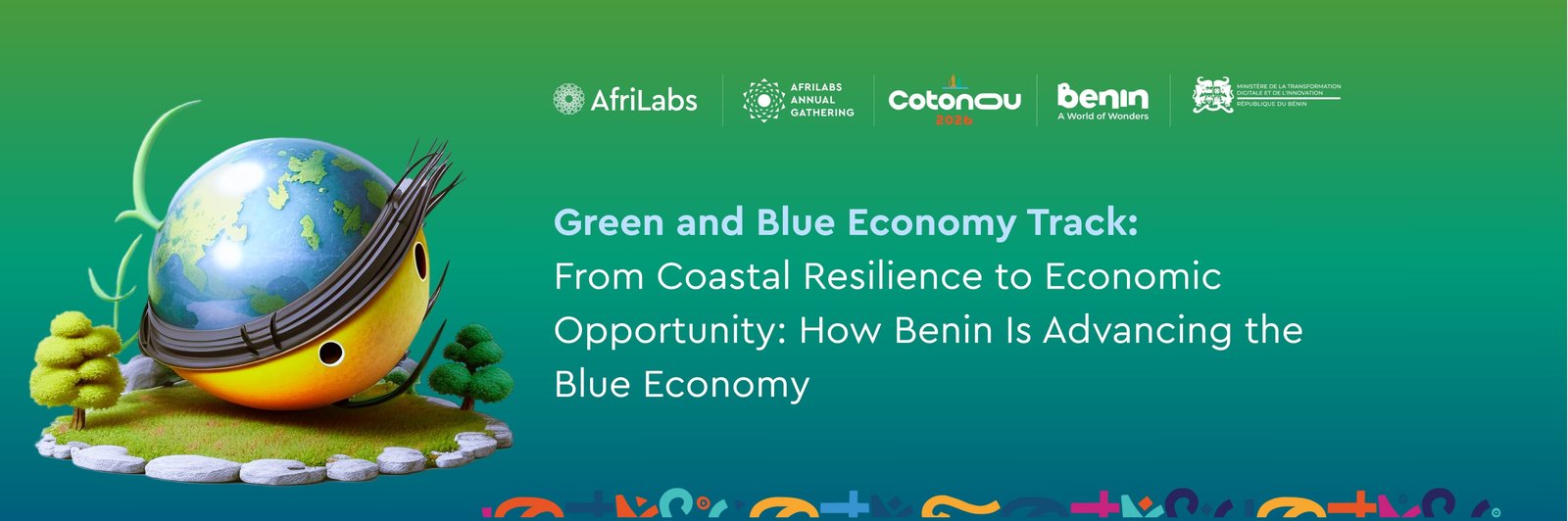
The Green & Blue Economy Track will examine how innovation, technology and entrepreneurship can strengthen climate resilience, foster the blue economy, advance circular economies, support clean industries and develop sustainable value chains while promoting responsible management of Africa's natural resources.
For Africa, the opportunity lies in connecting environmental protection with enterprise development, investment and job creation.
Benin's ongoing coastal resilience efforts demonstrate the importance of coordinated investment and institutional partnerships in pursuing these objectives.
As the continent explores new approaches to sustainable economic growth, the conversations in Cotonou will provide an opportunity to exchange experiences, examine practical solutions and strengthen collaboration across borders.
Africa's natural resources remain an important foundation for its economic future. How the continent protects and develops them will help shape the opportunities available to generations to come.
Join the Green & Blue Economy conversation at AAG 2026.
18–20 November 2026 | Cotonou, Benin
Register: https://bit.ly/AAG2026