*African music is finding new audiences, attracting investment and generating record revenues. As the industry expands, attention is turning to the business structures that…
African music is finding new audiences, attracting investment and generating record revenues. As the industry expands, attention is turning to the business structures that determine how creators earn, retain ownership and build lasting careers
A song recorded in Lagos can find its way into a playlist in London, a nightclub in Paris or someone's headphones in São Paulo, sometimes before the artist has performed outside their home country.
Digital platforms have changed how African music travels. Artists can reach listeners across continents, independent labels are building international audiences, and African sounds have become an important part of global popular culture.
The commercial figures are beginning to reflect that growth.
According to the International Federation of the Phonographic Industry (IFPI), recorded music revenues in sub-Saharan Africa grew by 15.2% in 2025, reaching $120 million. The region was among the fastest-growing recorded music markets globally.
In Nigeria alone, artists generated more than ₦60 (approximately $44 million ) billion in royalties on Spotify in 2025, according to the platform's Loud & Clear report. That represented growth of more than 140% over two years.
The figures tell a story of an industry finding new commercial opportunities. They also raise an important question about what happens after a song becomes successful.
A million streams may demonstrate an artist's popularity, but the income generated depends on several factors, including where listeners are located, the revenue earned by the platform, and the agreements governing ownership and royalty distribution.
For an artist, understanding those arrangements can be just as important as producing the music itself.
The business behind the music
Behind every successful release is a network of producers, composers, sound engineers, distributors, publishers, managers and investors.
Each plays a role in bringing music to audiences and building the industry around it.
As the market grows, the ability of creators to protect their intellectual property, negotiate contracts and access financing becomes increasingly important.
Consider an independent artist who has built a following online but needs resources to record an album, produce videos or organise performances. They may have an audience and a viable business opportunity, yet securing financing can still be difficult.
Unlike established companies, emerging creative businesses may not have physical assets that traditional lenders readily accept as collateral. Their commercial value is often tied to copyrights, royalties, brands and other intellectual property.
Strengthening the institutions that recognise, protect and help finance these assets could create new opportunities for Africa's creative entrepreneurs.
The potential extends beyond music.
Film, animation, fashion, gaming, design and digital content production are all part of a growing creative economy. Each industry requires its own combination of investment, intellectual property protection, skilled professionals and access to markets.
**From cultural influence to economic opportunity **
Africa's growing cultural presence offers opportunities for creators, investors and businesses.
But international recognition alone cannot build an industry. Sustainable growth requires functioning rights-management systems, reliable payment mechanisms, professional development opportunities and business structures that allow creative enterprises to expand.
The experiences of African music businesses show how digital technology can open markets while introducing new questions about revenue distribution and ownership.
They also demonstrate why the creative economy deserves a place in wider discussions about Africa's innovation future.
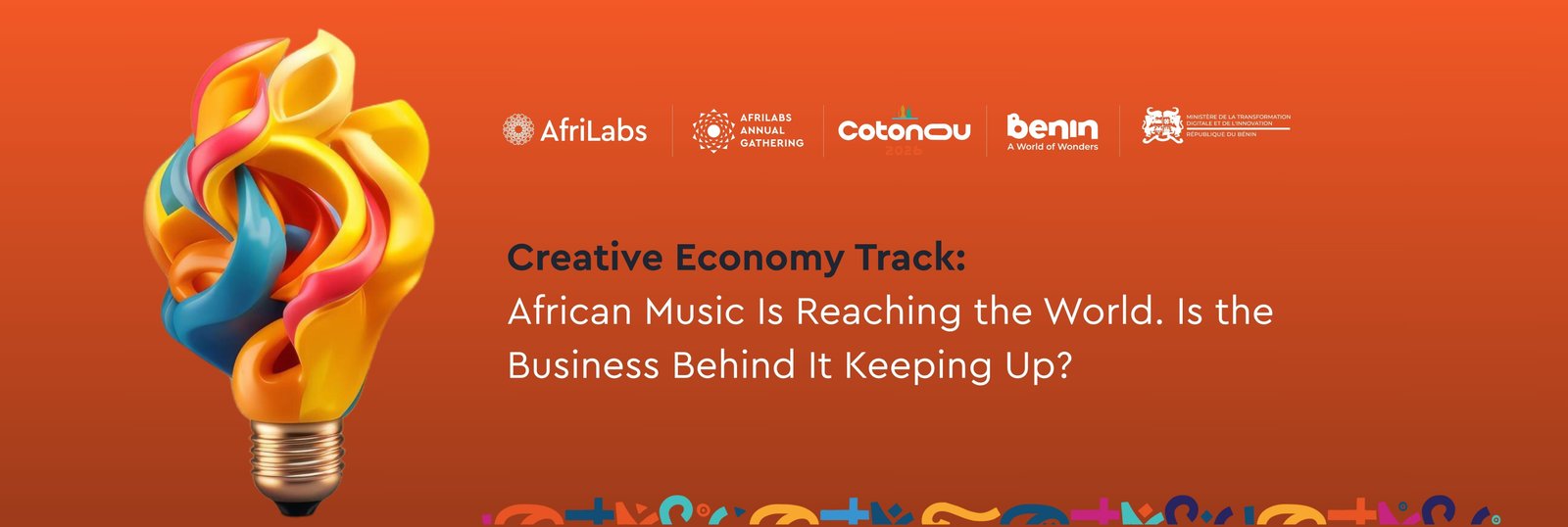
These issues will feature in the Creative Digital Economy Track at the 11th AfriLabs Annual Gathering, taking place from 18 to 20 November 2026 in Cotonou, Benin.
The track will explore how intellectual property systems, digital platforms, financing models, stronger institutions and enabling policies can support Africa's creative industries and expand their access to global markets.
For creators, investors, policymakers and innovation ecosystem leaders, the conversation presents an opportunity to examine how African creativity can translate into sustainable businesses and economic opportunities.
African creative talent has demonstrated its ability to reach audiences around the world. Building the institutions and commercial systems to support that talent will help determine how much further the industry can grow.
Join the Creative Digital Economy Track at AAG 2026.
18–20 November 2026 | Cotonou, Benin
Register: https://bit.ly/AAG2026